
www.HealthyHearing.com |
Hearing loss and autoimmune diseasesLupus and rheumatoid arthritis are linked to hearing problemsKey points:
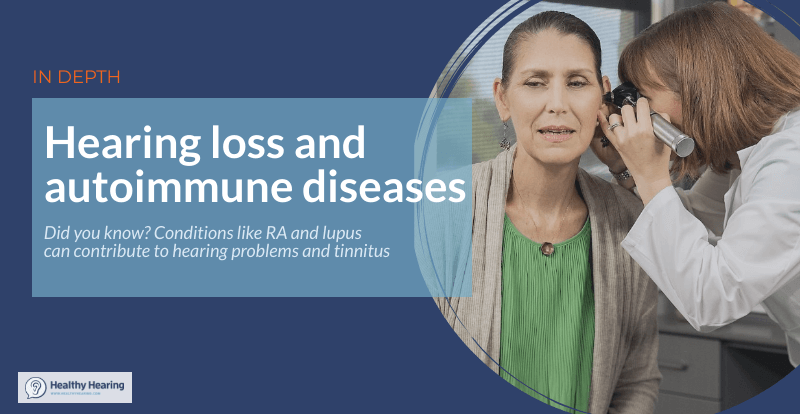
Did you know hearing loss can be related to an underlying condition—not simply age or noise exposure? When this happens, the condition is often an autoimmune disease such as rheumatoid arthritis (RA) or lupus. Research indicates that hearing loss, tinnitus and other hearing problems are more common among people with autoimmune disorders.
A hearing test is recommended for people with autoimmune conditionsAudiologist Trisha Milnes encourages all her patients with autoimmune diseases to request hearing tests. Her clinic even makes a point of reaching out to patients with certain autoimmune-related illnesses, asking about their hearing, said Milnes, chief of Audiology and Speech Pathology at the Charlie Norwood Virginia Medical Center, a Veterans Health Administration facility. "It's very necessary," she explained. What is an autoimmune disease?Your immune system fights off disease. Sometimes, it works incorrectly, causing harmful types of inflammation when no actual threat is present. This malfunction can happen spontaneously—without a clear cause—or it can sometimes occur in reaction to an infection. One well-known autoimmune disease is type 1 diabetes. Other autoimmune diseases you may have heard of include RA, Hashimoto's autoimmune thyroiditis, Sjögren's syndrome, celiac disease, ankylosing spondylitis, Graves' disease, vitiligo, lupus, and psoriasis. (Note that allergies are not considered an autoimmune disorder.) How are autoimmune diseases linked to hearing loss?Not all autoimmune disorders affect hearing, but many of them do. Often the hearing damage is related to harmful inflammation in the delicate ear anatomy, or disrupted blood flow to the ear. The severity of the hearing loss can vary. Depending on the underlying disease, it can:
Given how complex both hearing and the immune systems are, it's not always possible to know what role an autoimmune disorder played in hearing loss. Autoimmune disorders can flare up and then go away (remission). A person may not ever realize the link to their hearing loss. "In many cases, though the hearing loss is permanent, the cause of the damage can [come and go], so there's no way to diagnose the cause of the damage after it has happened," explained Aaron Abend, executive director of the Autoimmune Registry, Inc. Sometimes autoimmune medications are to blameNot only can autoimmune disorders cause hearing problems, so can the medications used to treat them. More than 200 hundred drugs are linked to hearing loss and tinnitus, including several that are used to manage autoimmune conditions, such as monoclonal antibodies. What are the treatment options?When an autoimmune disorder causes hearing problems, treatment may include:
Autoimmune diseases known to cause hearing problems1. Autoimmune inner ear disorderThe autoimmune disease most directly connected to hearing is autoimmune inner ear disorder (AIED). In this rare disorder, immune cells attack the inner ear, leading to progressive hearing loss that may fluctuate. The hearing loss can be sudden, but according to an article in the Hearing Journal, the onset of AIED is usually slower, taking days to months. About one-third of AIED patients also have a systemic autoimmune disorder, such as lupus or RA. 2. Rheumatoid arthritis (RA)Rheumatoid arthritis (RA) is a chronic autoimmune illness that begins in the joints, usually in the hands, wrists and knees, and can spread in severe cases to internal organs. A 2020 research overview concluded that people with RA were more than four times as likely to have sensorineural hearing loss, but did not have more risk of conductive (blockages) or mixed hearing loss. In most cases, RA affects both ears, and the hearing loss may fluctuate. 3. LupusSystemic lupus erythematosus is a chronic autoimmune illness that can affect the joints, skin, kidneys, blood cells, brain, heart, lungs—and ears. Sometimes hearing loss is the first symptom a patient notices. Studies range broadly in estimating the percentage of lupus patients who have hearing-related symptoms, but a recent estimate put it at about 25 percent. With lupus, hearing loss often begins in one ear, affecting high-pitched sounds, before spreading to the other ear and affecting lower pitches, known as reverse-slope hearing loss. It can also cause tinnitus (ringing in the ears), dizziness or aural fullness. 4. Thyroid disease and hearing lossLow thyroid levels and hearing loss are connected. Hypothyroidism can cause sensorineural hearing loss, a connection that was first reported in medical studies all the way back in 1907. Regardless, there's good news for people with hearing loss who are newly diagnosed with hypothyroidism: Treating thyroid disease can help with hearing loss. 5. Certain skin disordersSkin conditions may also affect hearing. Vitiligo, which creates patches of skin without pigment, has been linked to a higher risk of sensorineural hearing loss. Psoriasis, which causes patches of scaly itchy skin, increases the risk of sudden hearing loss by 50 percent. 6. Meniere's diseaseIt's unclear if Meniere's disease—which causes intermittent bouts of hearing loss, tinnitus, ear fullness and vertigo—is an autoimmune disease, though it does appear that the two often overlap, according to this study. What can you do?If you've been recently diagnosed with an autoimmune disorder, keep in mind that your hearing can be affected. If you feel like you're not hearing well, get a hearing test to find out. And if you experience sudden or new changes in your hearing, let your doctor know right away. Joy Victory, managing editor, Healthy Hearing
|
Hearing centers close to me:
| Ohio State Univ Hearing |
| Nationwide Childrens Hospital |
| Ohio State University Audiology Clinic |
| Columbus Speech & Hearing Center |
Find hearing clinics in my country:


 Joy Victory has extensive experience editing consumer health information. Her training in particular has focused on how to best communicate evidence-based medical guidelines and clinical trial results to the public. She strives to make health content accurate, accessible and engaging to the public.