
www.HealthyHearing.com |
Tinnitus and hearing loss during pregnancy: Why does it happen?Common causes of pregnancy-related tinnitusKey points:
Pregnancy is a wonderful time for many, but most of us would agree the side effects can be exhausting. For some unlucky women, these side effects include tinnitus and more rarely, hearing loss. How common is tinnitus in pregnancy?Quite common. Tinnitus, or a ringing, buzzing or pulsing in the ears, affects roughly 1 in 3 women during pregnancy, several studies indicate. Comparatively, it affects approximately 1 in 10 women who aren't pregnant.
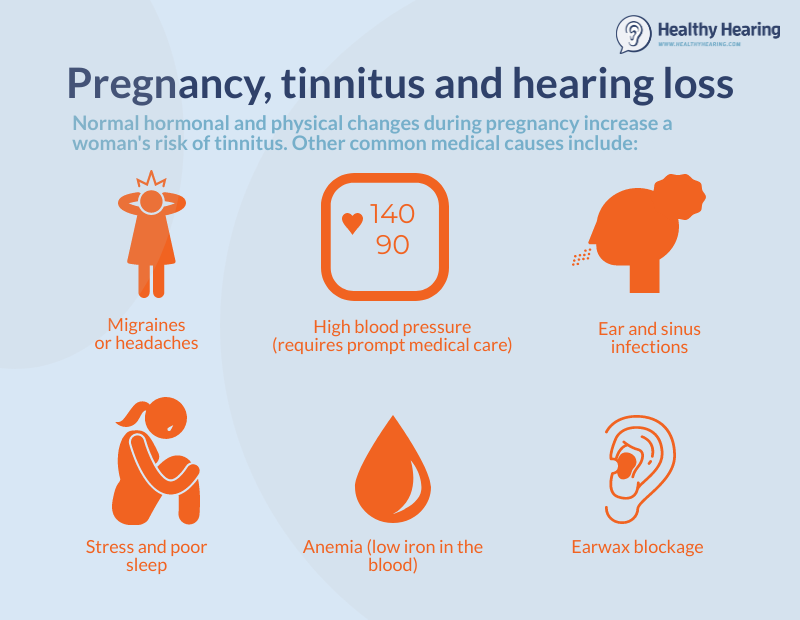
Let's take a closer look at some of the common reasons you might experience ear ringing during pregnancy. What causes tinnitus and hearing loss in pregnancy?Unsurprisingly, normal hormonal and circulatory changes during pregnancy are largely to blame. As hormone levels (like estrogen and progesterone) rise, they can alter fluid balance, blood flow, and pressure regulation in the inner ear. These changes can lead to symptoms like ringing, buzzing, or a feeling of fullness in the ears. A 2025 systemic review found that while many pregnant women experienced auditory and vestibular changes, they often resolved after childbirth.
Less commonly, certain medical causes (either pre-existing or arising during pregnancy) may lead to ringing in the ears. These include: High blood pressureHigh blood pressure can lead to hearing loss and tinnitus because our delicate inner ears are highly sensitive to any changes in blood flow. High blood pressure is an especially dangerous condition during pregnancy, so it’s something you should take seriously and monitor. In pregnant women, high blood pressure can indicate preeclampsia or the more rare HELLP syndrome, both of which can escalate into medical emergencies for both mom and baby. Preeclampsia and related conditions affect between 3-10% of pregnancies. While tinnitus and muffled hearing doesn't affect all pregnant women with high blood pressure, it's still considered a red flag and important to mention to your medical provider. Why do I hear my heartbeat in my ear?For some pregnant women, high blood pressure can cause pulsatile tinnitus, where the noise in their ears matches the rhythm of their heartbeat. They may also notice muffled hearing or a loud whooshing sound. With so many blood vessels near the ears, it’s no wonder tinnitus is a sign of elevated blood pressure. Even if you’ve never had high blood pressure before, pregnancy can trigger it, so it’s important to have it monitored and managed by your healthcare provider. Iron-deficiency anemiaPregnant women are at elevated risk of developing iron-deficiency anemia. If you don't get enough iron in your diet while pregnant, you may experience a range of symptoms, including hearing problems. Studies show that anemia and hearing impairment, including tinnitus, are linked—though the relationship isn't well understood and the research was conducted on older adults who are already more prone to hearing issues. If your pregnant, make sure your prenatal vitamin has sufficient iron because your body will need approximately twice as much iron as it did in your pre-pregnancy days. Try focusing on eating iron-rich foods to reduce ringing such as:
Headaches or migrainesIf you’re prone to getting headaches, you could be at increased risk for developing tinnitus or hearing problems (including sound sensitivity, known as hyperacusis) when you’re pregnant. If you frequently get headaches or migraines during pregnancy, you should mention it to your doctor. They can go over your treatment options with you, while carefully weighing the risk to your unborn baby. Sinus or ear infectionsPregnancy isn’t just hard on you, it’s also tough on your immune system. Your immune system is temporarily suppressed while you’re pregnant. That can mean more colds and viruses for you. It also might mean more allergy symptoms. The risk of getting colds is that they can cause sinus or middle ear infections. Those infections can cause issues like temporary hearing loss and may require treatment. To minimize your risk of catching the cold or other viruses while pregnant you should:
It’s always better to prevent something than it is to try to treat it. Earwax buildupEven if we think of it as gross, earwax can keep your ears safe from things like microorganisms and dust. But it can also backfire on you. Too much earwax can lead to hearing loss and tinnitus. If earwax builds up, it can cause hearing loss that won’t improve until the blockage is cleared. You can try earwax-softening drops at home, or your doctor can remove it with a small tool called a curette. The good news is that this is usually an easy fix. Stress and poor sleepPregnancy can be extremely stressful. Hearing loss and chronic stress are linked, especially when stress is causing physical problems like high blood pressure. If you have a history of tinnitus, it also may be aggravated because you feel stressed all the time and aren't getting enough sleep. Jaw problemsTMJ disorder (jaw clicking and pain) is more common among pregnant women, due to hormonal changes, swelling, stress and other factors. This is known as somatic tinnitus. Problems relating to the jaw joint can cause tinnitus or a feeling of clogged ears because an imbalance in the joint results in pressure in the ear. If you suspect this may be an issue for you, it might be a good idea to see a dentist if all other medical reasons have been ruled out. A simple oral device can lead to better alignment, which may improve your tinnitus and potentially improve the feeling of clogged ears. Medication side effectsNumerous medications are linked to hearing loss, tinnitus and dizziness. Common ones that a pregnant woman might take include over-the-counter pain relievers and certain blood pressure medications. Otosclerosis (rare)Although rare, some pregnant women may develop a condition known as otosclerosis. This is abnormal bone growth in the ears, causing hearing loss and tinnitus. The surge of hormones are thought to be one reason why pregnant women seem more at risk. Talk to your provider about hearing changes during pregnancyTemporary hearing loss and tinnitus can be a big challenge when you’re pregnant. You worry that something is going horribly wrong and wonder how you’re going to function when you’re not hearing your best. It's vital that you receive regular prenatal care and discuss your symptoms with your healthcare provider. Any sudden hearing loss or pulsing tinnitus should be treated promptly. Emily Ostrowski, content manager, Healthy Hearing
|
Hearing centers close to me:
| Ohio State Univ Hearing |
| Nationwide Childrens Hospital |
| Ohio State University Audiology Clinic |
| Columbus Speech & Hearing Center |
Find hearing clinics in my country:


 Emily is an experienced journalist and medical content writer based in Maine. Passionate about delivering enlightening and accurate content, she is committed to empowering people to make informed choices regarding their hearing health.